Wrapping Up This Photography Assignment
Spending 4 months on the Oregon coast taking photos of natural features was a dream I couldn’t have imagined not long ago.
When I learned that Cape Perpetua National Scenic Area in Siuslaw National Forest was looking for a photographer for their visitor center remodel, I immediately applied and was elated when I was selected for the project.
I arrived in early October 2025, right after the federal government shutdown began on the first of the month. I was still able to settle into my RV site, nestled in the rainforest and across the street from the ocean, which lulled me to sleep each night.
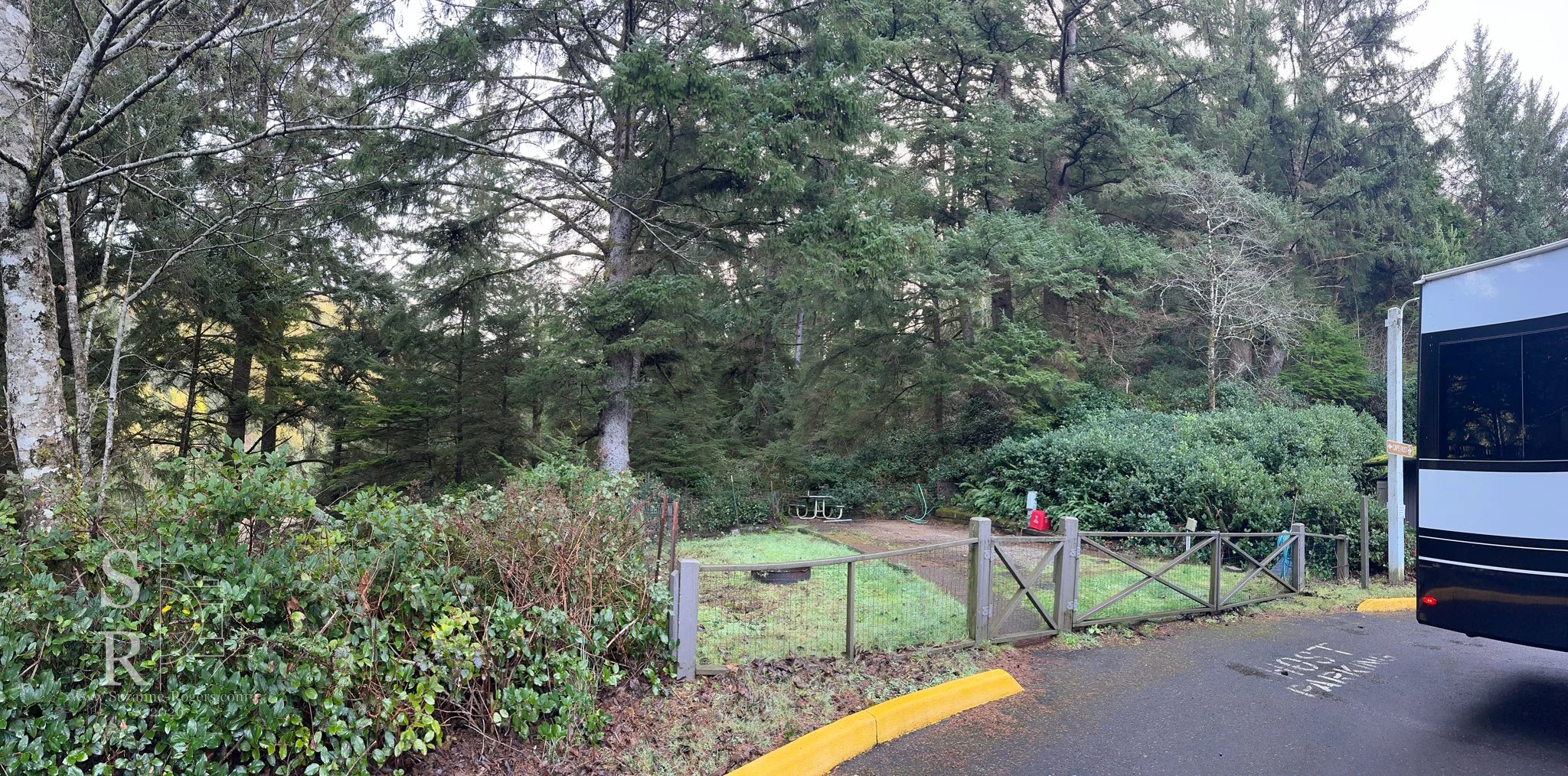
Home for 4 months, surrounded by the rainforest
Growing up on the Northern California coast, I’d hated the rain as a kid, but I’ve grown to love it and the sound of it on my roof. I looked forward to fall and winter on the Oregon Coast in an area that averages over 100 inches of rain per year.
Because of the shutdown, the visitor center was closed and very few staff remained available. My coordinator sent a few ideas to get me started with the assignment, which would wrap up at the end of January 2026. I started exploring the roads and trails in the area, in awe of the beauty around me.
With several trailheads within hundreds of feet of my door, I researched my options and decided to do my first hike on the Discovery Loop Trail, a lollipop trail that connects to a larger network of trails that span the southern portion of the Scenic Area. I intentionally left my camera at home and took only my phone, which still slowed my pace significantly as I stopped to take several photos along the way.
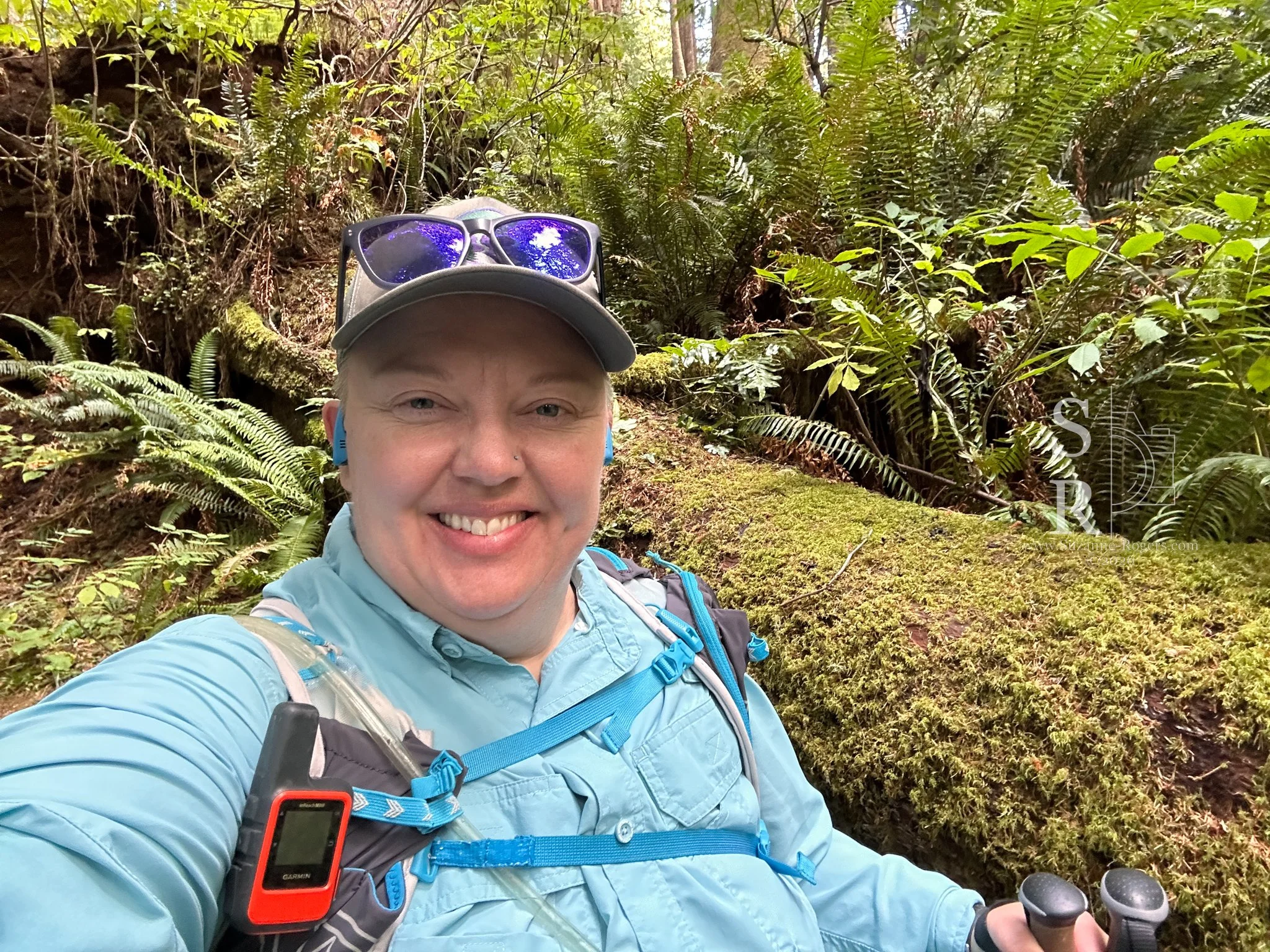
My first hike at Cape Perpetua National Scenic Area
In hindsight, I wish I HAD taken my camera, because the rainforest changes quickly, and much had changed by the next time I was able to repeat that hike with my camera.
That night, I took advantage of the clear skies and headed up to the top of Cape Perpetua. At 800 feet of elevation, it is the highest point one can access by car on the Oregon Coast. A short trail will take visitors to a stone shelter that was built in 1933 by the Civilian Conservation Corps.
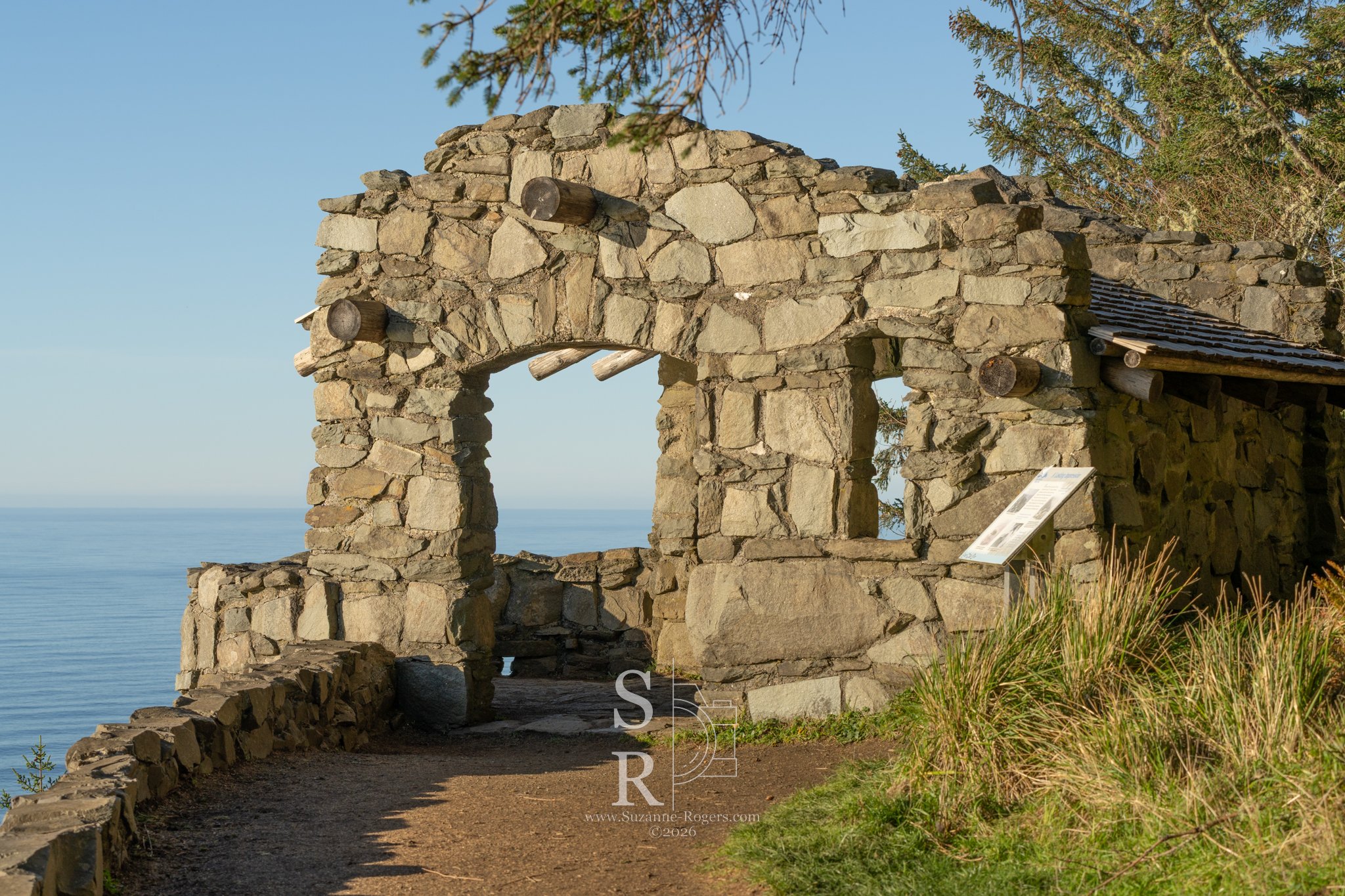
CCC stone shelter at the top of Cape Perpetua
I knew to get there early, as Milky Way season was just wrapping up for the year, and I love to capture night shots. I pointed my camera south and took a few images at a couple of the vista points along the trail.
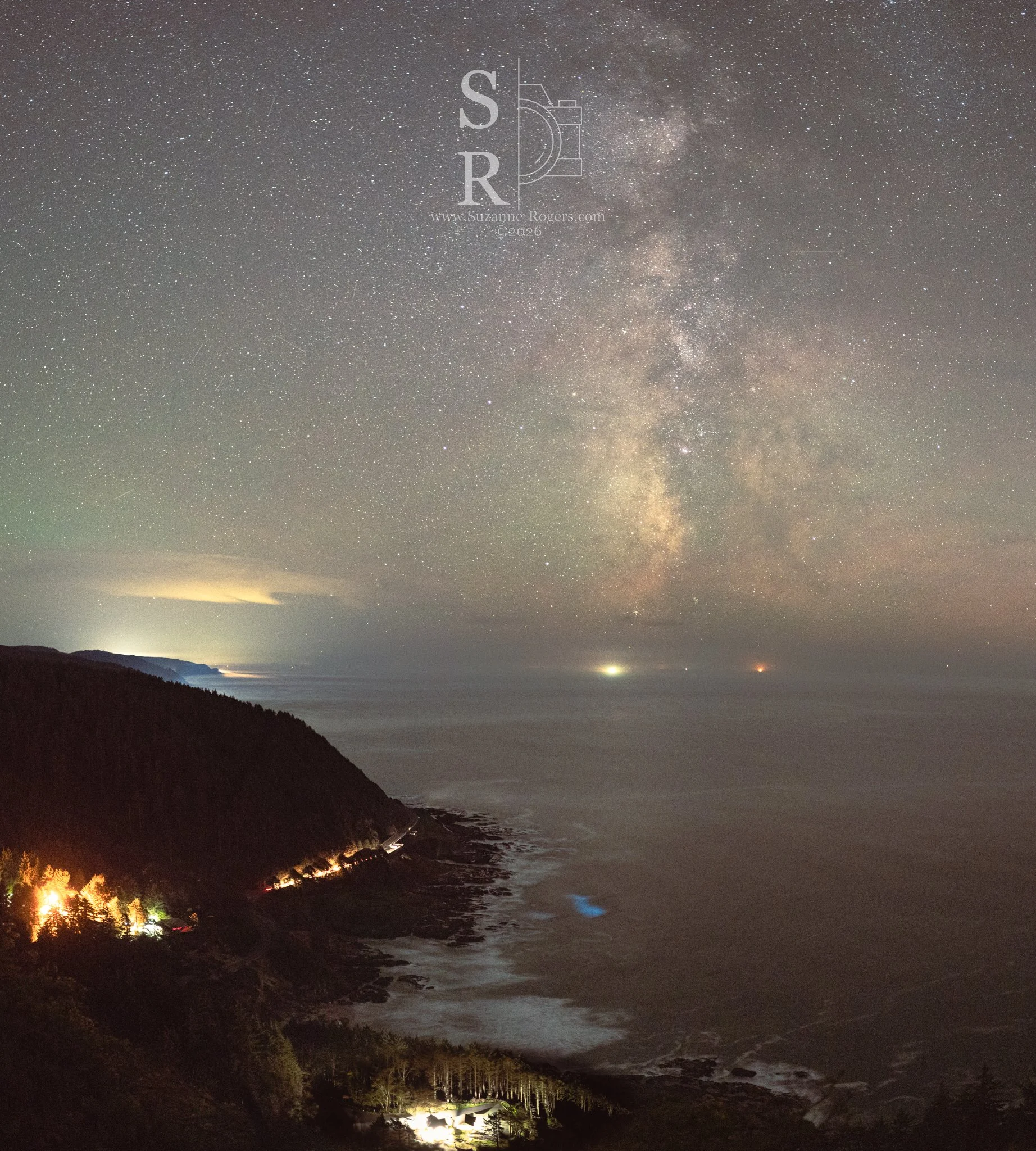
Night view atop Cape Perpetua, with the Milky Way core and bioluminescence
I then headed back down to sea level to stop at Thor’s Well and Spouting Horn, two popular features at the Scenic Area. I trekked down to the main viewing platform and set up my gear, taking some shots at a few angles. I started out facing south, desperate to capture the Milky Way as it sank into the sea, as this was likely to be my last opportunity to photograph it here, given the rarity of clear skies, the lunar cycles and the seasonal nature of the Milky Way core.
Next, I pointed my camera to the north to capture the Cape and Lemmon Comet. I noticed a familiar glow in the waves, and reviewed my images, affirming that I had indeed seen bioluminescence lighting up the water.
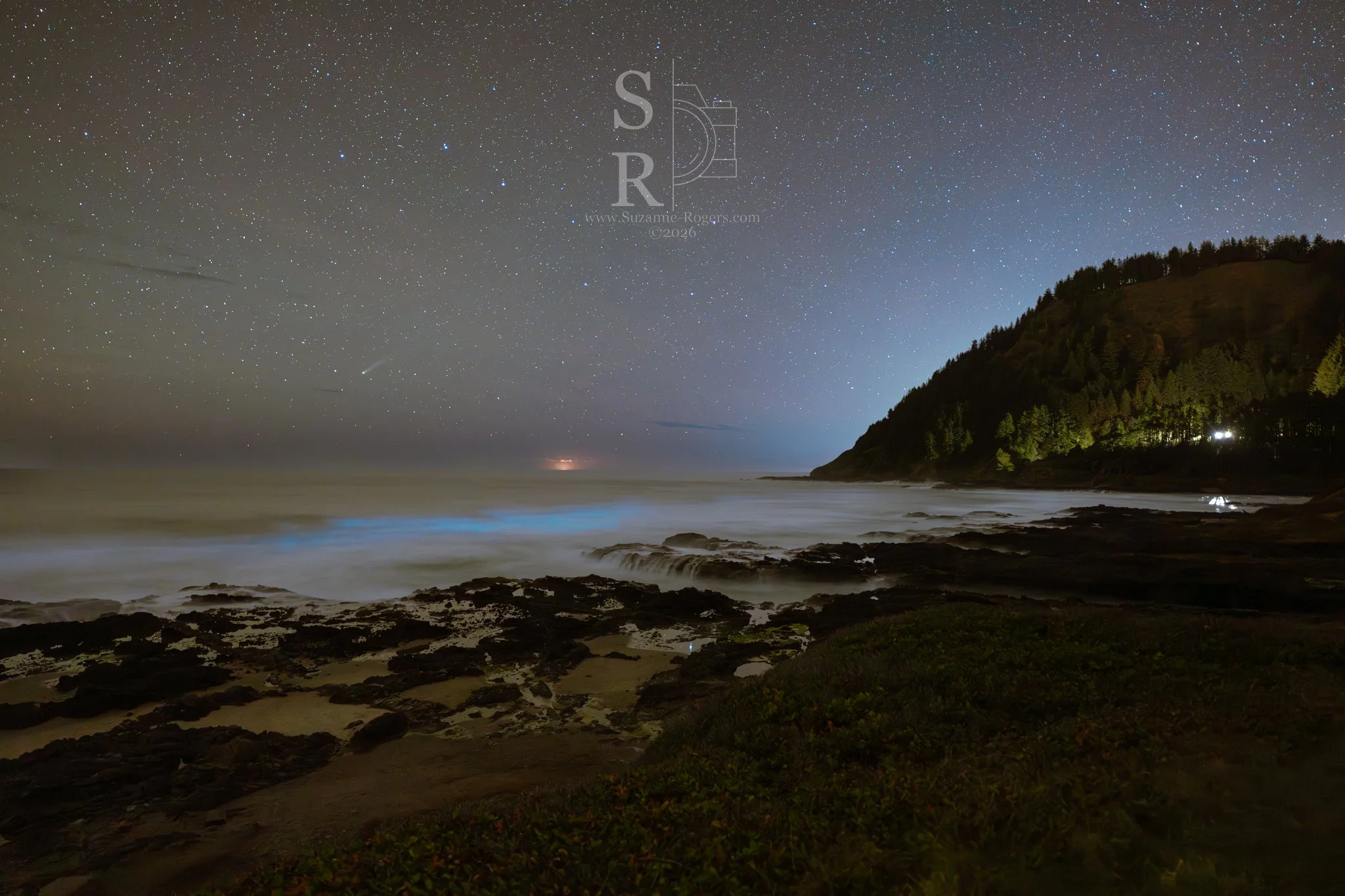
Cape Perpetua, Lemmon Comet and bioluminescence
I then turned my camera south again to see if there was any in the water in that direction, and was pleasantly surprised. I took a few shots to try to capture one with Spouting Horn, a blowhole in the basalt formations, going off with the bioluminescence.
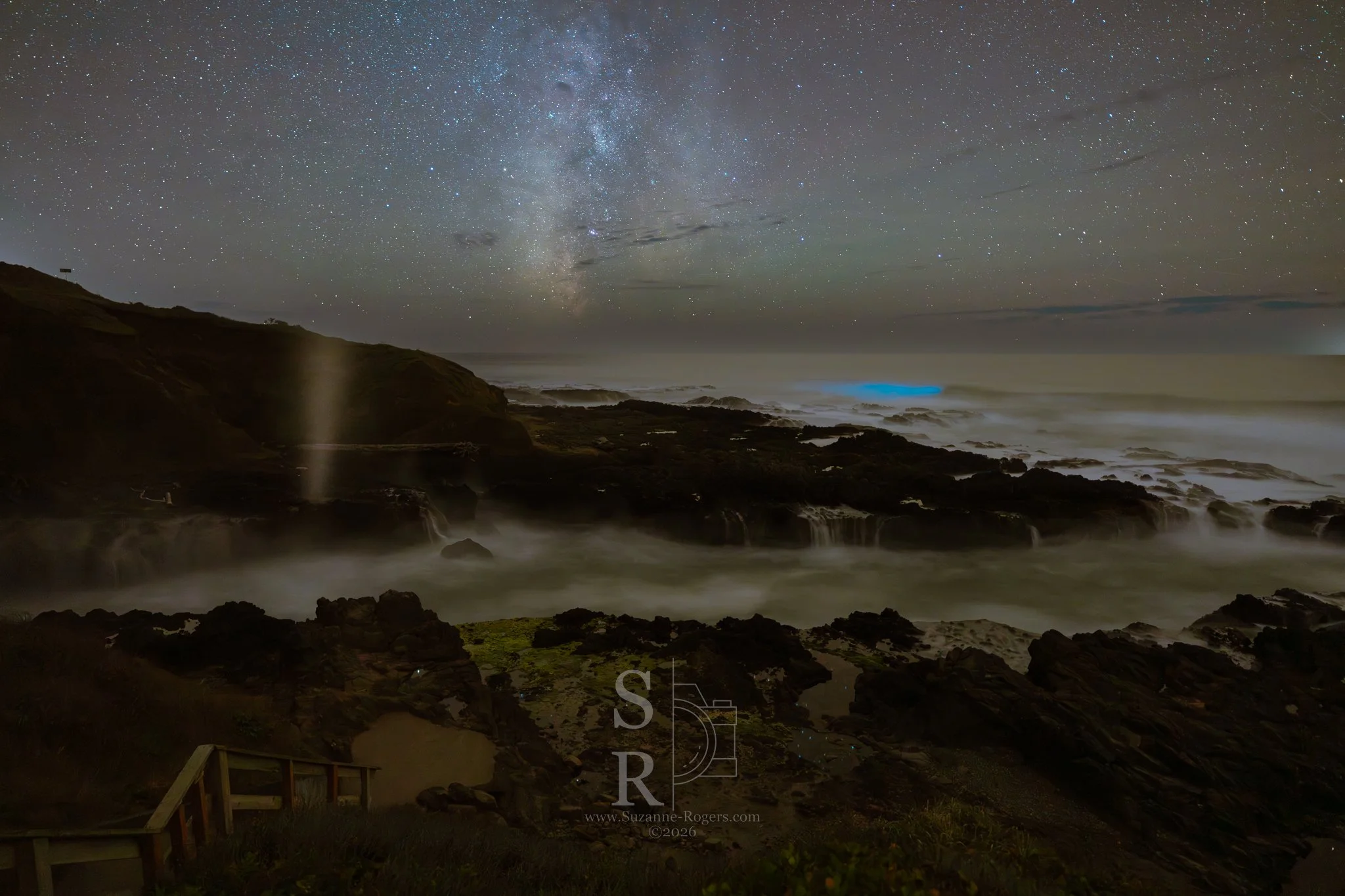
Cape Perpetua’s Spouting Horn and Cook’s Chasm with bioluminescence
Cape Perpetua had many beautiful surprises in store for me during my time there. It was a great challenge for me to view the rainforest and the coast in ways I hadn’t before, and to notice so much more. It’s changed the ways I look at other landscapes and the details that would have otherwise escaped me.
To see more of the images captured during this project, click here.
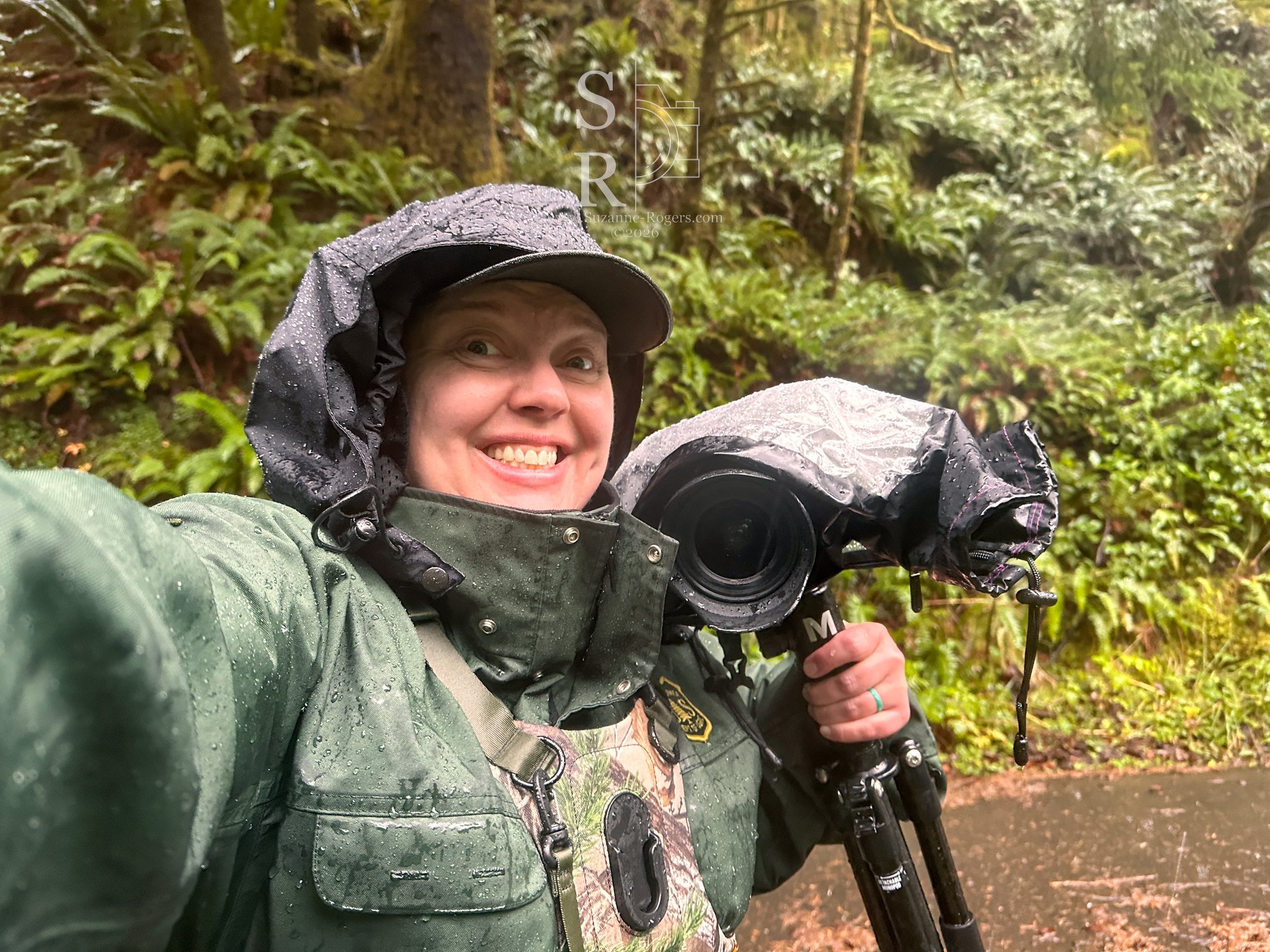
Chasing waterfalls along USFS Road 55
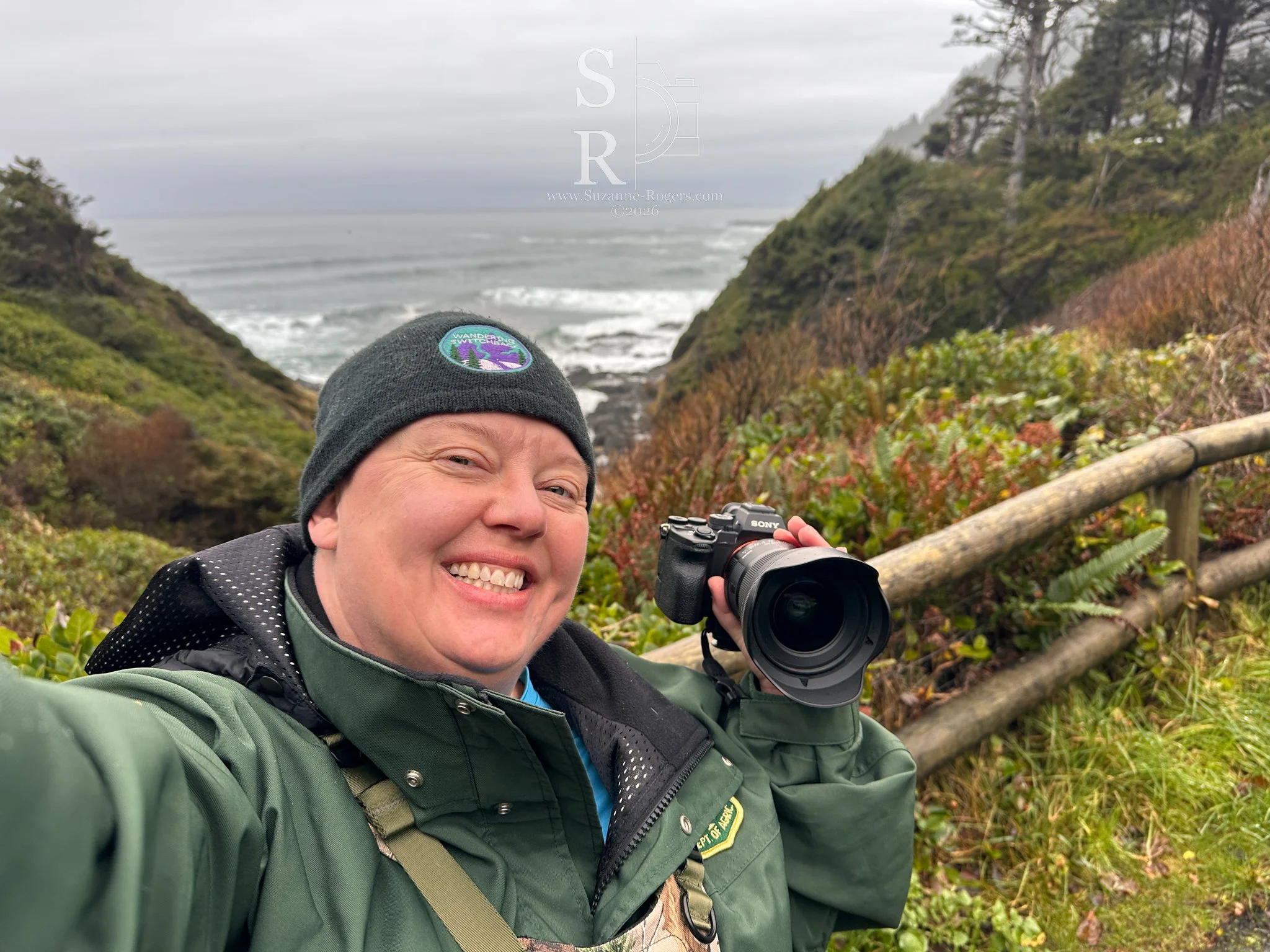
Enjoying photographing the king tides